Chakras are subtle energy centers within the human body that influence our physical vitality, emotional balance, mental clarity, and spiritual awareness. Originating from ancient Eastern traditions, the chakra system describes how life energy flows through us, shaping how we experience the world and ourselves.
There are seven main chakras, aligned along the spine from its base to the crown of the head. Each chakra is associated with specific qualities, emotions, organs, colors, and elements. When energy flows freely through these centers, we feel balanced, present, and connected. When it becomes blocked or imbalanced, we may experience discomfort on physical, emotional, or energetic levels.
Chakras are subtle energy centers within the human body that influence our physical vitality, emotional balance, mental clarity, and spiritual awareness. Originating from ancient Eastern traditions, the chakra system describes how life energy flows through us, shaping how we experience the world and ourselves.
There are seven main chakras, aligned along the spine from its base to the crown of the head. Each chakra is associated with specific qualities, emotions, organs, colors, and elements. When energy flows freely through these centers, we feel balanced, present, and connected. When it becomes blocked or imbalanced, we may experience discomfort on physical, emotional, or energetic levels.
Each chakra plays a unique role in our overall well-being:
Together, they form an interconnected system where harmony in one chakra supports balance in all others.
Balanced chakras support:
When one chakra is out of balance, it can affect others, creating patterns of stress, fatigue, insecurity, or emotional overwhelm. Chakra awareness helps us recognize these patterns and gently restore equilibrium.
Chakras can be supported and harmonized through various practices, including:
Crystals are often used as energetic companions, each resonating with specific chakras and qualities. When chosen with intention, they can help reinforce balance and awareness in everyday life.
Each chakra carries its own symbolism, strengths, and lessons. On the following pages, you’ll find deeper insights into every individual chakra, including:
Begin your journey at the foundation and move upward, or follow the path that feels most aligned with your current needs.


The Root Chakra is foundational. When all is well with this chakra, you’ll feel secure, calm and anchored in reality. You’ll be bold enough to tackle new challenges, and you’ll feel confident doing so. This makes a properly aligned Root Chakra vital whenever you’re trying something new or pursuing a major life goal.
You can develop a blocked Root Chakra if something threatens your basic survival needs (e.g. for food, shelter or money). Even if you simply fear that your basic survival will be undermined, your Root Chakra can come out of alignment in response.
The Root chakra is about being physically there and feeling at home in situations. If it is open, you feel grounded, stable and secure. You don’t unnecessarily distrust people. You feel present in the here and now and connected to your physical body. You feel you have sufficient territory.If you tend to be fearful or nervous, your Root chakra is probably under-active. You’d easily feel unwelcome.If this chakra is over-active, you may be very materialistic and greedy. You’re probably obsessed with being secure and resist change.
What it is: Think about your root chakra (AKA first chakra) as the foundation of a house, except for your body—it’s sturdy, stabilizing, and supportive, keeping everything safely connected as long as it’s functioning properly. It’s associated with the base of the spine, the pelvic floor, and the first three vertebrae, and responsible for an individual’s sense of security and survival, says Olivia. Because of that, it’s also connected to whatever you use to ground yourself, including basic needs such as food, water, shelter, and safety, as well as your more emotional needs such as letting go of fear and feeling safe. As you well know, when these needs are met, you tend to worry less.
When it’s blocked: A variety of ailments can occur from blockages, including anxiety disorders, fears, or nightmares, adherents say. Physically, the first chakra is associated with problems in the colon, with the bladder, with elimination, or with lower back, leg, or feet issues.

The Sacral Chakra is key to your creative energy. It is related not only to pursuits of artistry and the imagination but also to your sexuality and your capacity for change in all areas of life. Your Sacral Chakra might become misaligned or blocked in some way if you’re stressed about some aspect of your sexuality. Or, if you are unsatisfied in your relationship or struggling to experience pleasure in life more generally. It can also be disturbed by negative feedback that makes you doubt your creative capacities.
The Sacral chakra is about feeling and sexuality. When it is open, your feelings flow freely, and are expressed without you being over-emotional. You are open to intimacy and you can be passionate and lively. You have no problems dealing with your sexuality.If you tend to be stiff and unemotional or have a “poker face,” the Sacral chakra is under-active. You’re not very open to people.If this chakra is over-active, you tend to be emotional all the time. You’ll feel emotionally attached to people and you can be very sexual.
What it is: Consider the second chakra the most fun out of the seven. Located above the pubic bone and below the navel, it’s responsible for our sexual and creative energies, says Vitomir. Associated with the color orange and the element of water, when your sacral chakra is aligned, you will likely feel great: You’re friendly, passionate, and successfully fulfilled while also eliciting feelings of wellness, abundance, pleasure, and joy. (Nice!) By honoring your body and expressing yourself creatively, you’re keeping the energy wheels turning and fluid.
When it’s blocked: When you’re feeling uninspired creatively or have some emotional instability, your sacral chakra may be misaligned. Likewise, this can also be associated with physical sexual disfunction, while also potentially experiencing fear of change, depression, or addiction-like behaviors.kin
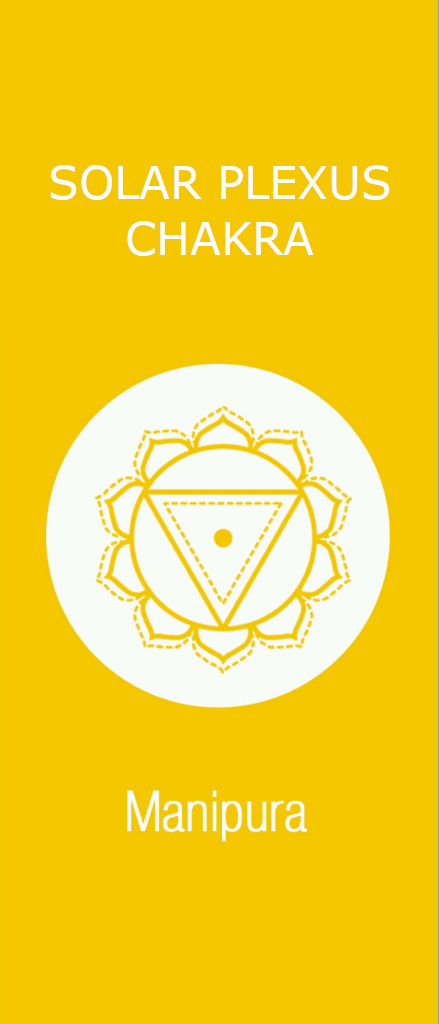
The Solar Plexus Chakra is often thought of as vital for self-esteem, autonomy, and determination. Consequently, it is sometimes called the “personal power” chakra.
When all is as it should be with this chakra, you’ll have a clear path ahead of you. You should know what is necessary for success. You will also feel independent like you can accomplish almost anything if you set your mind to it. Meanwhile, this chakra can easily be negatively affected by perceived failures, unpleasant social experiences, or lingering feelings of low self-worth from childhood.
The Solar Plexus or Navel chakra is about asserting yourself in a group. When it is open, you feel in control and you have sufficient self esteem.When the Navel chakra is under-active, you tend to be passive and indecisive. You’re probably timid and don’t get what you want.If this chakra is over-active, you are domineering and probably even aggressive.
What it is: With its name meaning “lustrous gem” in Sanskrit, the third chakra (not to be confused with your “third eye,” which is the sixth chakra—more on that in a minute) is said to be your source of individual power, ruling over self-esteem. Or as Olivia says, it is the “action and balance chakra that focuses on individual willpower, personal power, and commitment.” Located from the navel to about the ribcage, it reportedly governs all things metabolic, digestive, and stomach-related.
When it’s blocked: You can suffer from low self-esteem, have difficulty making decisions, and may have anger or control issues. Olivia notes that it’s not just feeling badly about yourself, but also may lead you to outwardly express apathy, procrastination, or that you’re able to be taken advantage of easily. Likewise, you’ll also possibly have a tummy ache of some kind such as digestive issues or gas. #d3892b
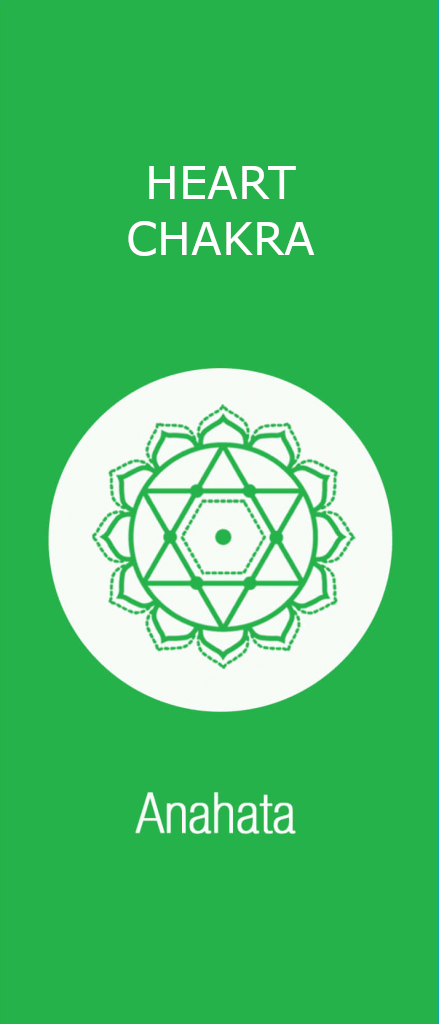
As you might expect, the Heart Chakra is intimately connected to your capacity for love and compassion in all their forms. It is sometimes described as a bridge between the mind, body, and spirit.
When your Heart Chakra is well balanced, you will be able to offer empathy to others, be emotionally open, and enjoy a deep sense of inner peace. You will feel your emotions fully, and yet also understand them on a cognitive level. Anything negatively related to love can trouble the Heart Chakra; a breakup, a grief process, a difficult friendship, or even just an instance of casual cruelty.
The Heart chakra is about love, kindness and affection. When it is open, you are compassionate and friendly, and you work at harmonious relationships.When your Heart chakra is under-active, you are cold and distant.If this chakra is over-active, you are suffocating people with your love and your love probably has quite selfish reasons.
What it is: As the central chakra, the fourth chakra, found at the center of your chest, represents where the physical and the spiritual meet, according to the Chopra Center. Physically, it’s said to encapsulate the heart, the thymus gland (which plays a vital role in your endocrine and lymphatic system), the lungs, and the breasts. And as its name implies, is all about the love. “It’s the awakening to spiritual awareness, forgiveness, and service,” says Olivia. Associated with the color green and pink (yes, the millennial, rose quartz kind), it’s believed that when your heart chakra is aligned and balanced, love and compassion are flowing freely—both in terms of giving it out and getting it back. “Your good vibes are practically contagious,” says Olivia.
When it’s blocked: A closed heart chakra can give way to grief, anger, jealousy, fear of betrayal, and hatred toward yourself and others—especially in the form of holding a grudge against something or someone. Holding onto hurt harbors negative feelings and cuts you off from opportunities to love.
The Throat Chakra regulates your self-expression in all senses, influencing how authentically you convey your deepest self to the world. Your directness, emotional honesty and ownership of your needs connect to this area.
When your Throat Chakra is aligned properly, you will feel able to say what you mean, be well understood by others, and speak the truth in ways that are appropriate. In other words, you’ll be forthright without being blunt. Difficult experiences with communication can shift the Throat Chakra. For example, a tough job interview or a bad argument can shift your Throat Chakra.
The Throat chakra is about self-expression and talking. When it is open, you have no problems expressing yourself, and you might be doing so as an artist.When this chakra is under-active, you tend not to speak much, and you probably are introverted and shy. Not speaking the truth may block this chakra.If this chakra is over-active, you tend to speak too much, usually to domineer and keep people at a distance. You’re a bad listener if this is the case.
What it is: Have zero problem saying how you feel? Your fifth chakra, which is all about speaking your inner truth—or specifically, ensuring that your inner truths are properly communicated—is likely well-balanced. The throat chakra rules all communication, and is the first of the three solely spiritual chakras (as opposed to the lower ones, which manifest themselves in a more physical way), according to Olivia. Anatomically, the throat chakra is associated with the thyroid, parathyroid, jaw, neck, mouth, tongue, and larynx. When this chakra is in check, you’re able to fully listen as well as speak and express yourself clearly.
When it’s blocked: In addition to having trouble speaking your truth, you find it hard to pay attention and stay focused, or fear judgment from others—which can further hinder your ability to keep it real. Physically, this blockage can manifest itself as a sore throat, thyroid issues, neck and shoulder stiffness, or tension headaches.
The Third Eye Chakra is a powerful energy source when it is working well. It determines your intuition, your alignment with the Universe, and your ability to see the bigger picture in life.
When you have an open Third Eye chakra, you are adept at picking up signs. Trust in your gut feelings and plan according to your greatest goals. Law Of Attraction successes and manifestation experiences relate to this type of openness. However, the Third Eye can be misaligned if someone is making you doubt your wider purpose. Or, if you tend to prize rationality over intuition.
The Third Eye chakra is about insight and visualization. When it is open, you have a good intuition. You may tend to fantasize. If it is under-active, you’re not very good at thinking for yourself, and you may tend to rely on authorities. You may be rigid in your thinking, relying on beliefs too much. You might even get confused easily.If this chakra is over-active, you may live in a world of fantasy too much. In excessive cases halucinations are possible.
What it is: Don’t let its name confuse you. The third-eye chakra is actually your sixth chakra, and is physically located between your eyebrows. Organs including the pituitary gland, eyes, head, and lower part of the brain are said to be ruled by the third eye. And it reportedly governs your intuition—plus the ability to recognize and tap into it. What’s more, the third eye is also said to be responsible for all things between you and the outside world, serving as a bridge between the two, allowing you to cut through any illusions and drama to see the clear picture.
When it’s blocked: You may have trouble accessing your intuition, trusting your inner voice, recalling important facts, or learning new skills. And if your lower chakras—AKA the root, sacral, solar plexus, and heart chakras—and are unbalanced, your third eye will likely be as well, which may cause you to act more judgmental, dismissive, and introverted. A third-eye blockage is associated with a broad range of issues, including depression, anxiety, and a more judgmental attitude—while physically, it’s said to cause headaches, dizziness, and a slew of other brain-health issues.
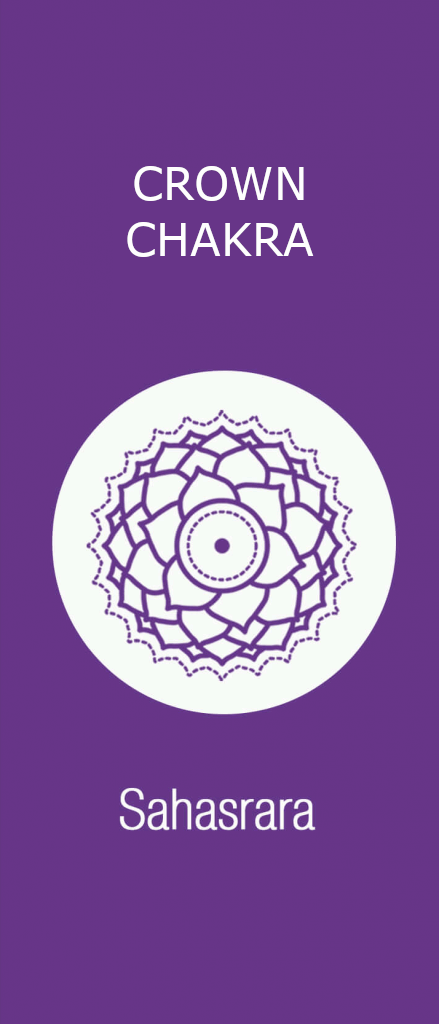
Finally, the Crown Chakra, the highest chakra, is what determines your spiritual connectivity. This chakra is sometimes called “thousand petal lotus” chakra. Given its place as the highest chakra, it is vital in creating a life you love, and in attaining a feeling of peace. However, working with it is a notoriously subtle process.
When all is well, you will be in tune with beauty in the world around you. Plus, you will experience feelings of profound joy. Life will feel worthwhile, glorious and rich. Unfortunately, a traumatic life experience can move the Crown Chakra out of positive. This can then cause you to doubt yourself and purpose.
The Crown chakra is about wisdom and being one with the world. When this chakra is open, you are unprejudiced and quite aware of the world and yourself.If it is under-active, you’re not very aware of spirituality. You’re probably quite rigid in your thinking.If this chakra is over-active, you are probably intellectualizing things too much. You may be addicted to spirituality and are probably ignoring your bodily needs.
What it is: Known in Sanskrit as the Sahaswara chakra or the “thousand petal lotus” chakra, it is the center of enlightenment and our spiritual connection to our higher selves, others, and ultimately, the divine, according to the Chopra Center. As the name suggests, the seventh chakra located at the crown of your head. When aligned, the realizations that occur within you are said to be along the lines of pure awareness, consciousness, undivided, and all expansive. Basically, bigger than yourself and yet part of one giant universe.
When it’s blocked: A crown-chakra blockage may create feelings of isolation or emotional distress—basically feeling disconnected from everyone and everything. Or, you might feel like your normal self—just not in an exalted state of spiritual connection and enlightenment, which is totally okay and seriously normal. Unlike the other chakras, the crown chakra is often only opened up fully through specific yogic or meditative exercises, or at certain times—which is not a skill set you can call upon at any given moment. You may be able to get a taste of it, though, through daily practices—anything from meditation, prayer, to moments of silence and gratitude—to have those moments of spiritual connection.


The Root Chakra is foundational. When all is well with this chakra, you’ll feel secure, calm and anchored in reality. You’ll be bold enough to tackle new challenges, and you’ll feel confident doing so. This makes a properly aligned Root Chakra vital whenever you’re trying something new or pursuing a major life goal.
You can develop a blocked Root Chakra if something threatens your basic survival needs (e.g. for food, shelter or money). Even if you simply fear that your basic survival will be undermined, your Root Chakra can come out of alignment in response.
The Root chakra is about being physically there and feeling at home in situations. If it is open, you feel grounded, stable and secure. You don’t unnecessarily distrust people. You feel present in the here and now and connected to your physical body. You feel you have sufficient territory.If you tend to be fearful or nervous, your Root chakra is probably under-active. You’d easily feel unwelcome.If this chakra is over-active, you may be very materialistic and greedy. You’re probably obsessed with being secure and resist change.
What it is: Think about your root chakra (AKA first chakra) as the foundation of a house, except for your body—it’s sturdy, stabilizing, and supportive, keeping everything safely connected as long as it’s functioning properly. It’s associated with the base of the spine, the pelvic floor, and the first three vertebrae, and responsible for an individual’s sense of security and survival, says Olivia. Because of that, it’s also connected to whatever you use to ground yourself, including basic needs such as food, water, shelter, and safety, as well as your more emotional needs such as letting go of fear and feeling safe. As you well know, when these needs are met, you tend to worry less.
When it’s blocked: A variety of ailments can occur from blockages, including anxiety disorders, fears, or nightmares, adherents say. Physically, the first chakra is associated with problems in the colon, with the bladder, with elimination, or with lower back, leg, or feet issues.
The Sacral Chakra is key to your creative energy. It is related not only to pursuits of artistry and the imagination but also to your sexuality and your capacity for change in all areas of life. Your Sacral Chakra might become misaligned or blocked in some way if you’re stressed about some aspect of your sexuality. Or, if you are unsatisfied in your relationship or struggling to experience pleasure in life more generally. It can also be disturbed by negative feedback that makes you doubt your creative capacities.
The Sacral chakra is about feeling and sexuality. When it is open, your feelings flow freely, and are expressed without you being over-emotional. You are open to intimacy and you can be passionate and lively. You have no problems dealing with your sexuality.If you tend to be stiff and unemotional or have a “poker face,” the Sacral chakra is under-active. You’re not very open to people.If this chakra is over-active, you tend to be emotional all the time. You’ll feel emotionally attached to people and you can be very sexual.
What it is: Consider the second chakra the most fun out of the seven. Located above the pubic bone and below the navel, it’s responsible for our sexual and creative energies, says Vitomir. Associated with the color orange and the element of water, when your sacral chakra is aligned, you will likely feel great: You’re friendly, passionate, and successfully fulfilled while also eliciting feelings of wellness, abundance, pleasure, and joy. (Nice!) By honoring your body and expressing yourself creatively, you’re keeping the energy wheels turning and fluid.
When it’s blocked: When you’re feeling uninspired creatively or have some emotional instability, your sacral chakra may be misaligned. Likewise, this can also be associated with physical sexual disfunction, while also potentially experiencing fear of change, depression, or addiction-like behaviors.kin

The Solar Plexus Chakra is often thought of as vital for self-esteem, autonomy, and determination. Consequently, it is sometimes called the “personal power” chakra.
When all is as it should be with this chakra, you’ll have a clear path ahead of you. You should know what is necessary for success. You will also feel independent like you can accomplish almost anything if you set your mind to it. Meanwhile, this chakra can easily be negatively affected by perceived failures, unpleasant social experiences, or lingering feelings of low self-worth from childhood.
The Solar Plexus or Navel chakra is about asserting yourself in a group. When it is open, you feel in control and you have sufficient self esteem.When the Navel chakra is under-active, you tend to be passive and indecisive. You’re probably timid and don’t get what you want.If this chakra is over-active, you are domineering and probably even aggressive.
What it is: With its name meaning “lustrous gem” in Sanskrit, the third chakra (not to be confused with your “third eye,” which is the sixth chakra—more on that in a minute) is said to be your source of individual power, ruling over self-esteem. Or as Olivia says, it is the “action and balance chakra that focuses on individual willpower, personal power, and commitment.” Located from the navel to about the ribcage, it reportedly governs all things metabolic, digestive, and stomach-related.
When it’s blocked: You can suffer from low self-esteem, have difficulty making decisions, and may have anger or control issues. Olivia notes that it’s not just feeling badly about yourself, but also may lead you to outwardly express apathy, procrastination, or that you’re able to be taken advantage of easily. Likewise, you’ll also possibly have a tummy ache of some kind such as digestive issues or gas. #d3892b

As you might expect, the Heart Chakra is intimately connected to your capacity for love and compassion in all their forms. It is sometimes described as a bridge between the mind, body, and spirit.
When your Heart Chakra is well balanced, you will be able to offer empathy to others, be emotionally open, and enjoy a deep sense of inner peace. You will feel your emotions fully, and yet also understand them on a cognitive level. Anything negatively related to love can trouble the Heart Chakra; a breakup, a grief process, a difficult friendship, or even just an instance of casual cruelty.
The Heart chakra is about love, kindness and affection. When it is open, you are compassionate and friendly, and you work at harmonious relationships.When your Heart chakra is under-active, you are cold and distant.If this chakra is over-active, you are suffocating people with your love and your love probably has quite selfish reasons.
What it is: As the central chakra, the fourth chakra, found at the center of your chest, represents where the physical and the spiritual meet, according to the Chopra Center. Physically, it’s said to encapsulate the heart, the thymus gland (which plays a vital role in your endocrine and lymphatic system), the lungs, and the breasts. And as its name implies, is all about the love. “It’s the awakening to spiritual awareness, forgiveness, and service,” says Olivia. Associated with the color green and pink (yes, the millennial, rose quartz kind), it’s believed that when your heart chakra is aligned and balanced, love and compassion are flowing freely—both in terms of giving it out and getting it back. “Your good vibes are practically contagious,” says Olivia.
When it’s blocked: A closed heart chakra can give way to grief, anger, jealousy, fear of betrayal, and hatred toward yourself and others—especially in the form of holding a grudge against something or someone. Holding onto hurt harbors negative feelings and cuts you off from opportunities to love.
The Throat Chakra regulates your self-expression in all senses, influencing how authentically you convey your deepest self to the world. Your directness, emotional honesty and ownership of your needs connect to this area.
When your Throat Chakra is aligned properly, you will feel able to say what you mean, be well understood by others, and speak the truth in ways that are appropriate. In other words, you’ll be forthright without being blunt. Difficult experiences with communication can shift the Throat Chakra. For example, a tough job interview or a bad argument can shift your Throat Chakra.
The Throat chakra is about self-expression and talking. When it is open, you have no problems expressing yourself, and you might be doing so as an artist.When this chakra is under-active, you tend not to speak much, and you probably are introverted and shy. Not speaking the truth may block this chakra.If this chakra is over-active, you tend to speak too much, usually to domineer and keep people at a distance. You’re a bad listener if this is the case.
What it is: Have zero problem saying how you feel? Your fifth chakra, which is all about speaking your inner truth—or specifically, ensuring that your inner truths are properly communicated—is likely well-balanced. The throat chakra rules all communication, and is the first of the three solely spiritual chakras (as opposed to the lower ones, which manifest themselves in a more physical way), according to Olivia. Anatomically, the throat chakra is associated with the thyroid, parathyroid, jaw, neck, mouth, tongue, and larynx. When this chakra is in check, you’re able to fully listen as well as speak and express yourself clearly.
When it’s blocked: In addition to having trouble speaking your truth, you find it hard to pay attention and stay focused, or fear judgment from others—which can further hinder your ability to keep it real. Physically, this blockage can manifest itself as a sore throat, thyroid issues, neck and shoulder stiffness, or tension headaches.
The Third Eye Chakra is a powerful energy source when it is working well. It determines your intuition, your alignment with the Universe, and your ability to see the bigger picture in life.
When you have an open Third Eye chakra, you are adept at picking up signs. Trust in your gut feelings and plan according to your greatest goals. Law Of Attraction successes and manifestation experiences relate to this type of openness. However, the Third Eye can be misaligned if someone is making you doubt your wider purpose. Or, if you tend to prize rationality over intuition.
The Third Eye chakra is about insight and visualization. When it is open, you have a good intuition. You may tend to fantasize. If it is under-active, you’re not very good at thinking for yourself, and you may tend to rely on authorities. You may be rigid in your thinking, relying on beliefs too much. You might even get confused easily.If this chakra is over-active, you may live in a world of fantasy too much. In excessive cases halucinations are possible.
What it is: Don’t let its name confuse you. The third-eye chakra is actually your sixth chakra, and is physically located between your eyebrows. Organs including the pituitary gland, eyes, head, and lower part of the brain are said to be ruled by the third eye. And it reportedly governs your intuition—plus the ability to recognize and tap into it. What’s more, the third eye is also said to be responsible for all things between you and the outside world, serving as a bridge between the two, allowing you to cut through any illusions and drama to see the clear picture.
When it’s blocked: You may have trouble accessing your intuition, trusting your inner voice, recalling important facts, or learning new skills. And if your lower chakras—AKA the root, sacral, solar plexus, and heart chakras—and are unbalanced, your third eye will likely be as well, which may cause you to act more judgmental, dismissive, and introverted. A third-eye blockage is associated with a broad range of issues, including depression, anxiety, and a more judgmental attitude—while physically, it’s said to cause headaches, dizziness, and a slew of other brain-health issues.
Finally, the Crown Chakra, the highest chakra, is what determines your spiritual connectivity. This chakra is sometimes called “thousand petal lotus” chakra. Given its place as the highest chakra, it is vital in creating a life you love, and in attaining a feeling of peace. However, working with it is a notoriously subtle process.
When all is well, you will be in tune with beauty in the world around you. Plus, you will experience feelings of profound joy. Life will feel worthwhile, glorious and rich. Unfortunately, a traumatic life experience can move the Crown Chakra out of positive. This can then cause you to doubt yourself and purpose.
The Crown chakra is about wisdom and being one with the world. When this chakra is open, you are unprejudiced and quite aware of the world and yourself.If it is under-active, you’re not very aware of spirituality. You’re probably quite rigid in your thinking.If this chakra is over-active, you are probably intellectualizing things too much. You may be addicted to spirituality and are probably ignoring your bodily needs.
What it is: Known in Sanskrit as the Sahaswara chakra or the “thousand petal lotus” chakra, it is the center of enlightenment and our spiritual connection to our higher selves, others, and ultimately, the divine, according to the Chopra Center. As the name suggests, the seventh chakra located at the crown of your head. When aligned, the realizations that occur within you are said to be along the lines of pure awareness, consciousness, undivided, and all expansive. Basically, bigger than yourself and yet part of one giant universe.
When it’s blocked: A crown-chakra blockage may create feelings of isolation or emotional distress—basically feeling disconnected from everyone and everything. Or, you might feel like your normal self—just not in an exalted state of spiritual connection and enlightenment, which is totally okay and seriously normal. Unlike the other chakras, the crown chakra is often only opened up fully through specific yogic or meditative exercises, or at certain times—which is not a skill set you can call upon at any given moment. You may be able to get a taste of it, though, through daily practices—anything from meditation, prayer, to moments of silence and gratitude—to have those moments of spiritual connection.